
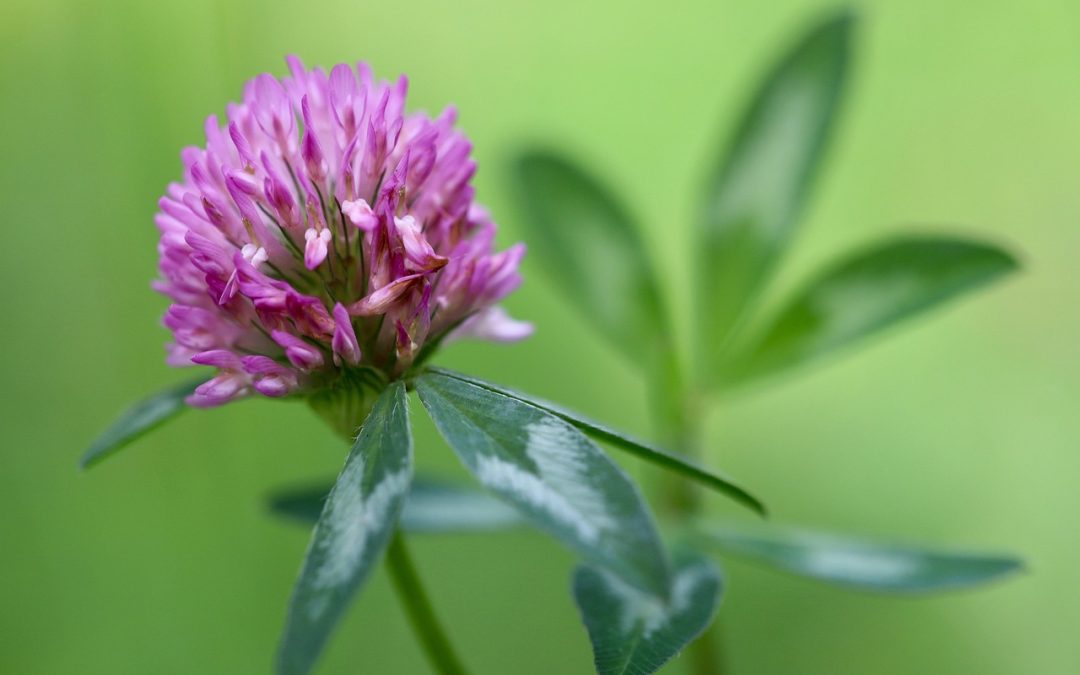
Red Clover – Trifolium pratense
Family: Fabaceae (Pea family) Parts Used: Top flowering parts (leaves and flowers)
Taste & Energetics: Sweet, salty; cooling. Properties: Alterative, antispasmodic, nutritive, lymphatic
Common Preparations: Infusions, tinctures, liquid extracts, vinegar, food
Description
Red clover is a perennial pasture plant found throughout Europe, Asia, and America. Belonging to the Leguminosae (Fabaceae) family, this well-known species has long been valued as a nutritious fodder crop for grazing animals.
Red clover typically displays three oval-shaped leaves (occasionally four) that grow along a slightly hairy, upright stem. The smooth green leaves usually feature a pale, V-shaped marking in the centre— a characteristic absent in white clover. Its flowers range from red to pink or purple and form dense, terminal ovoid or globular heads. These blossoms are fragrant and rich in nectar, making them highly attractive to bees. The plant also develops a deep taproot, which draws minerals and nourishment from the soil into the leaves above.
Constituents
Red clover contains phenolic acids, including salicylic acid and coumaric acids, as well as flavonols and a variety of isoflavones such as genistein, daidzein, formononetin, and biochanin-A. It also provides volatile oils and is a source of numerous nutrients, including calcium, chromium, magnesium, niacin, phosphorus, potassium, thiamine, and vitamin C.
Actions
Phytoestrogen, antispasmodic, alterative, hypotensive, anticancer, diuretic, nutritive tonic.
Indications
- Menopausal symptoms, particularly hot flushes
- Metabolic syndrome and atherosclerosis
- Hypertension
- Skin conditions such as eczema, boils, and acne
- Prostate cancer
- Bronchitis and whooping cough
- Osteoporosis
A Historical and Traditional Overview
Red Clover has been valued for centuries as a cleansing, medicinal herb. Ancient herbalists, including Hippocrates, and traditional Chinese and Russian healers, used it to support lung and skin health, particularly for chronic conditions like asthma, bronchitis, eczema, and skin ulcers.
In the 19th and early 20th centuries, Red Clover was used in patent medicines for cancer and chronic skin diseases. Historical herbalists described it as an alterative: an herb that supports the body’s natural elimination of metabolic wastes and promotes overall vitality. It was also used as an antispasmodic to ease dry, irritating coughs, including whooping cough, measles-related coughs, and bronchitis.
Key Historical Notes:
- King’s Dispensatory (1898): Recommended Red Clover for pertussis, bronchitis, laryngitis, phthisis, ulcers, burns, and cancerous conditions.
- Ellingwood (early 20th century): Advocated for Red Clover in cancerous diathesis, dry, spasmodic coughs, and bronchial irritation.
- Felter: Noted its effectiveness in chronic skin diseases, irritable airways, and malignancies.
- Hoffmann: Suggested it for childhood eczema, psoriasis, and chronic skin conditions.
- British Herbal Pharmacopoeia: Lists indications for eczema, psoriasis, chronic skin disease, and whooping cough.
Traditional herbalists often paired Red Clover with other alteratives like burdock, dandelion, nettle, and yellow dock for holistic support.
Modern Scientific Insights
Red Clover has been the subject of modern studies supporting many of its traditional uses:
- Cancer: Research has identified at least four anti-tumour compounds, including daidzein, genistein, and biochanin A. In vitro studies show potential for breast and prostate cancer prevention. Epidemiological and clinical studies suggest it is safe for people with a history of hormone-sensitive cancers.
- Anti-inflammatory & Antispasmodic: Extracts show potent anti-inflammatory effects, supporting respiratory and skin health.
- Hormonal Support: High in isoflavones, Red Clover mimics estrogen moderately, helping with menopause symptoms such as hot flashes, vaginal dryness, and osteoporosis. It may also aid hormonal imbalances like PMS and infertility. Studies show fermented Red Clover extract can support skeletal muscle, heart, and uterine health in post-menopausal women.
- Coughs & Respiratory Health: Mildly antispasmodic; historically used for dry, spasmodic coughs. Often combined with marshmallow root, plantain, or linden for moistening effects.
- Insulin Resistance & Type 2 Diabetes: May help regulate inflammation, support insulin sensitivity, and improve cholesterol levels, though more research is needed.
Nutritional and Holistic Benefits
Red Clover is nutrient-dense, providing minerals like calcium, magnesium, and potassium, along with polyphenols and phytoestrogens. As a whole-body tonic, it supports:
- Skin health: eczema, psoriasis, acne, rashes
- Lymphatic cleansing: historically used for scrofula and lymphatic congestion
- Hormonal balance: menopause support, PMS relief, infertility support
- Cancer prevention support (as part of a healthy lifestyle)
Unlike pharmaceutical drugs that suppress symptoms, Red Clover works holistically, supporting the body’s natural healing mechanisms.
Ways to Use Red Clover
As a food, both the flowers and young leaves of red clover are edible, enjoyed raw or cooked. The blossoms are mildly sweet with a light bean-like flavour, while the young leaves are delicate and mild.
- Raw: Add fresh florets and tender leaves to salads, sandwiches, or smoothies.
- Cooked: Sauté leaves or add to soups and stir-fries for improved digestibility.
- Baking: Dried, ground blossoms can replace up to 25% of flour in breads or muffins, adding subtle sweetness and protein.
- Garnish: Sprinkle fresh flowers over pancakes, desserts, omelettes, or blend into herb butter or flower salt.
- Sprouts: Sprouted clover seeds can be used like alfalfa sprouts in salads and sandwiches.
Tea/Infusion:
- Use 1 ounce of dried herb per quart of just-boiled water.
- Steep 10–15 minutes for a nourishing, nutrient-rich infusion.
Tincture & Liquid Extract
- These are alcohol based and need to be diluted with water or juice. they have a quicker and deeper affinity within the body entering the blood system quickly
- When taken sublingually (under the tongue), they are rapidly absorbed into the bloodstream, allowing for fast effects.
- The alcohol acts as a highly effective solvent, extracting a broad range of beneficial plant compounds and concentrating them, making the preparation potent.
- Liquid Extract (1:1 in 30% alcohol): Weekly dosage of 10–60 ml
Drug Interactions
Use with caution alongside hormone replacement therapy, methotrexate (a chemotherapy and immune-system suppressing agent), tamoxifen (a hormonal therapy used in breast cancer treatment), anticoagulant or antiplatelet medications such as warfarin, and contraceptive drugs.
Combined with Other Herbs
Blood Cleansing and Skin Health: Red clover is considered a premier “alterative” or blood-cleansing herb, often used in cases of chronic skin conditions like eczema, psoriasis, or acne.
- Burdock Root (Arctium lappa): A traditional pairing to support liver function and skin detox.
- Yellow Dock (Rumex crispus): Supports liver detoxification and skin health.
- Cleavers (Galium aparine): Enhances the lymphatic cleansing action.
- Calendula (Calendula officinalis): Soothes inflammation and supports the lymphatic system.
- Dandelion Root/Leaf (Taraxacum officinale): Aids in detoxification.
Hormonal Balance and Menopause: because red clover is high in isoflavones (phytoestrogens), it is a staple in formulas for hormonal balance, PMS, and menopausal comfort.
- Sage (Salvia officinalis): Often paired with red clover for hot flashes and night sweats.
- Black Cohosh (Actaea racemosa): Used in conjunction to help manage symptoms of menopause.
- Lemon Balm (Melissa officinalis): Calms the nervous system and adds a pleasant, light flavour.
- Chasteberry (Vitex): Used in hormonal regulation blends
Respiratory Support and Immune Health: Red clover has traditional uses for dry, spasmodic coughs.
- Marshmallow Root (Althaea officinalis): Adds moisture to soothe dry throats.
- Plantain (Plantago spp.): Helps with respiratory congestion.
- Licorice Root (Glycyrrhiza glabra): Soothes coughing and acts as a harmonizer in blends.
- Astragalus & Echinacea: Used for immune-enhancing and lymphatic support
Summary
Red Clover is a gentle yet powerful herb with a long tradition as a cleansing, nutritive, and hormonally supportive medicine. Its uses span skin, respiratory, and hormonal health, along with supportive roles in cancer prevention and chronic inflammation. With its nutrient density, pleasing flavour, and holistic benefits, Red Clover is truly a “flower of the field” medicine, offering both food and healing in one.
Red Clover & White Clover — Key Differences
Although often confused, Red Clover (Trifolium pratense) is the primary medicinal species in Western herbal medicine. White clover (Trifolium repens) has traditional uses but is not used as extensively.
Field identification:
Red clover leaves are softly hairy underneath; white clover leaves are smooth.
Red Clover (T. pratense)
- Rich in isoflavones (biochanin A, formononetin)
- Phytoestrogenic, alterative, anti-inflammatory
- Premier herb for menopausal support (hot flushes, night sweats)
- Supports cardiovascular health and healthy lipid balance
- Traditionally used for chronic skin conditions (eczema, psoriasis)
- Mild expectorant; calming and gently nourishing
- May support bone density during menopause
White Clover (T. repens)
- Higher in antioxidant flavonoids (rutin, quercetin)
- Traditionally used as expectorant, antiseptic, and antidiarrhoeal
- Used in some traditions as a deworming herb
- Topical use studied for wound healing
Safety Considerations
Red clover is generally well tolerated and considered a premier botanical for menopausal support. Its isoflavones (biochanin A and formononetin) gently bind to estrogen receptors, helping ease hot flushes, night sweats, and related symptoms.
However, due to its phytoestrogenic and mild blood-thinning effects:
- Avoid in pregnancy and lactation (especially in higher doses).
- Use caution in hormone-sensitive conditions (e.g., estrogen-dependent cancers).
- Consult a practitioner if taking anticoagulant medications; rare interactions (e.g., methotrexate) have been reported.
- White clover also carries mild anticoagulant effects.
Always source high-quality herb—freshly dried, vibrant red flowering tops—avoiding brown or mouldy material.
The information provided is for educational purposes and is not intended to be a substitute for medical treatment. Consult your medical care provider before using herbal medicine, particularly if you have a known medical condition, are on any medication, and if you are pregnant or nursing.